
Cyprus – one island, three worlds
Most people know Cyprus as a holiday island – sun, sea, history. But anyone who stays longer, or moves here, quickly notices that Cyprus is not a straightforward destination. It is a place with an unusual political situation, and understanding it helps enormously – whether crossing the border, changing money, or simply knowing which rules apply where.
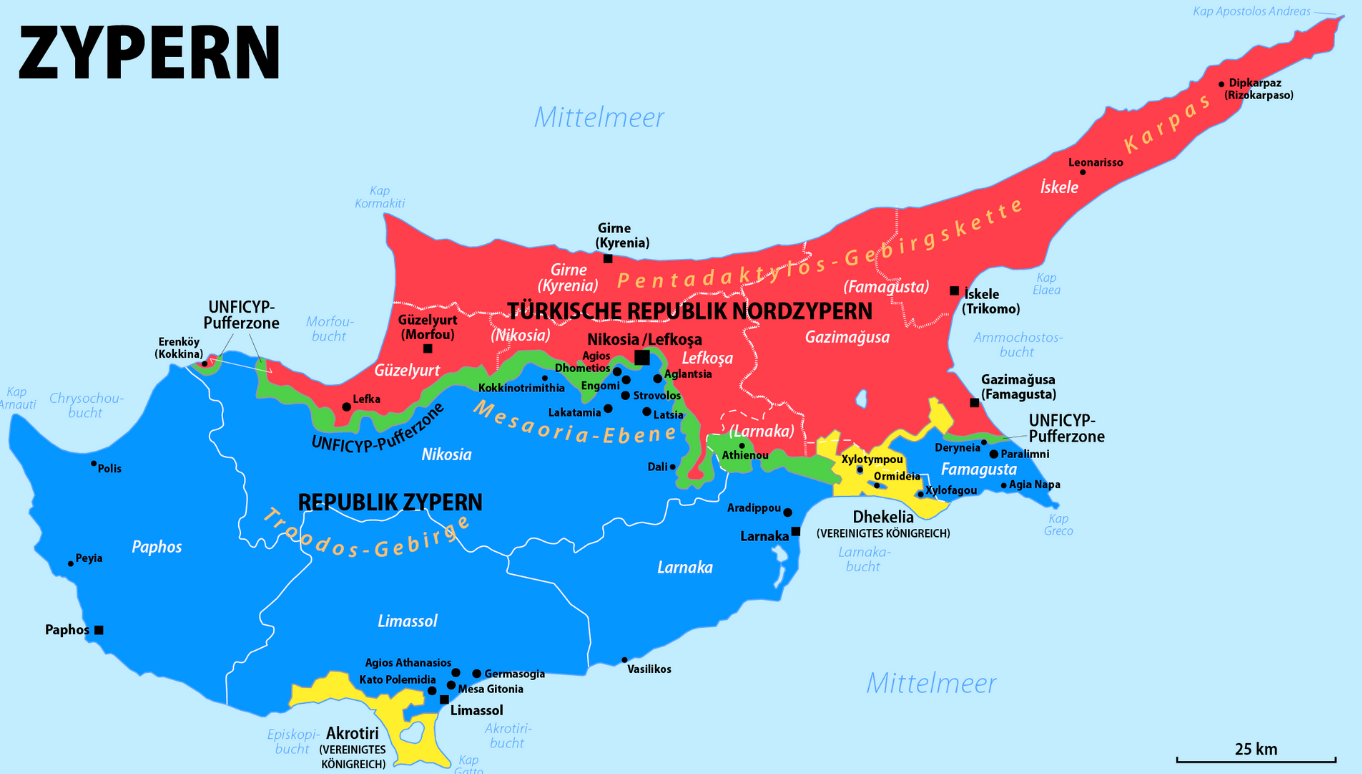
Cyprus sits strategically between Europe, Asia and the Middle East. Many talk about "the Greek part" or "the Turkish part" – few about the whole island, and almost nobody about the British territories that still exist today.
THREE SPACES ON ONE ISLAND
• Republic of Cyprus – Greek-influenced, an EU member, internationally recognised. • Turkish Republic of Northern Cyprus (TRNC) – recognised only by Turkey. • British military bases – Akrotiri & Dhekelia, sovereign British territory to this day. This division is no accident. It is the result of history, power and unresolved conflict. In practical terms it means two currencies, two administrations, two legal systems – and borders you genuinely cross in everyday life.
WHAT THIS MEANS FOR YOU
You don't need to be a historian to find your way around. But knowing why the island is divided makes daily life make sense: why the North pays in Lira and the South in Euro, why there are checkpoints, and why "recognised" and "unrecognised" are more than just words here. In the articles that follow we look at the three worlds one by one – how the division happened, how the North works, how the South functions, and the role of the often-forgotten British bases.
THE BRITISH TERRITORIES – AKROTIRI & DHEKELIA
Right in the middle of Cyprus lies sovereign British territory to this day: the two military bases of Akrotiri and Dhekelia. Their own legal system, military use, no tourism – you drive through, you notice it and often don't realise what it actually means. That is exactly why Cyprus is divided into three realities, not two.
BORDER CROSSINGS IN DAILY LIFE
In daily life, moving between the sides is more straightforward than the politics suggests: North → South usually no problem, South → North likewise. People commute, tourists switch sides – life happens between the systems. The British territories are the quiet detail that completes the whole picture.