
Salamis: ancient city and St Barnabas Monastery
Ancient City of Salamis, Famagusta–İskele main road, near Yeniboğaziçi, north of Famagusta (Gazimağusa)
For many centuries Salamis was one of the most important cities in Cyprus. The ruins lie on the east coast, about six kilometres north of Famagusta (Gazimağusa). Close by stands the Monastery of the Apostle Barnabas, now a museum. Together they make a good half-day trip.
HISTORY IN BRIEF
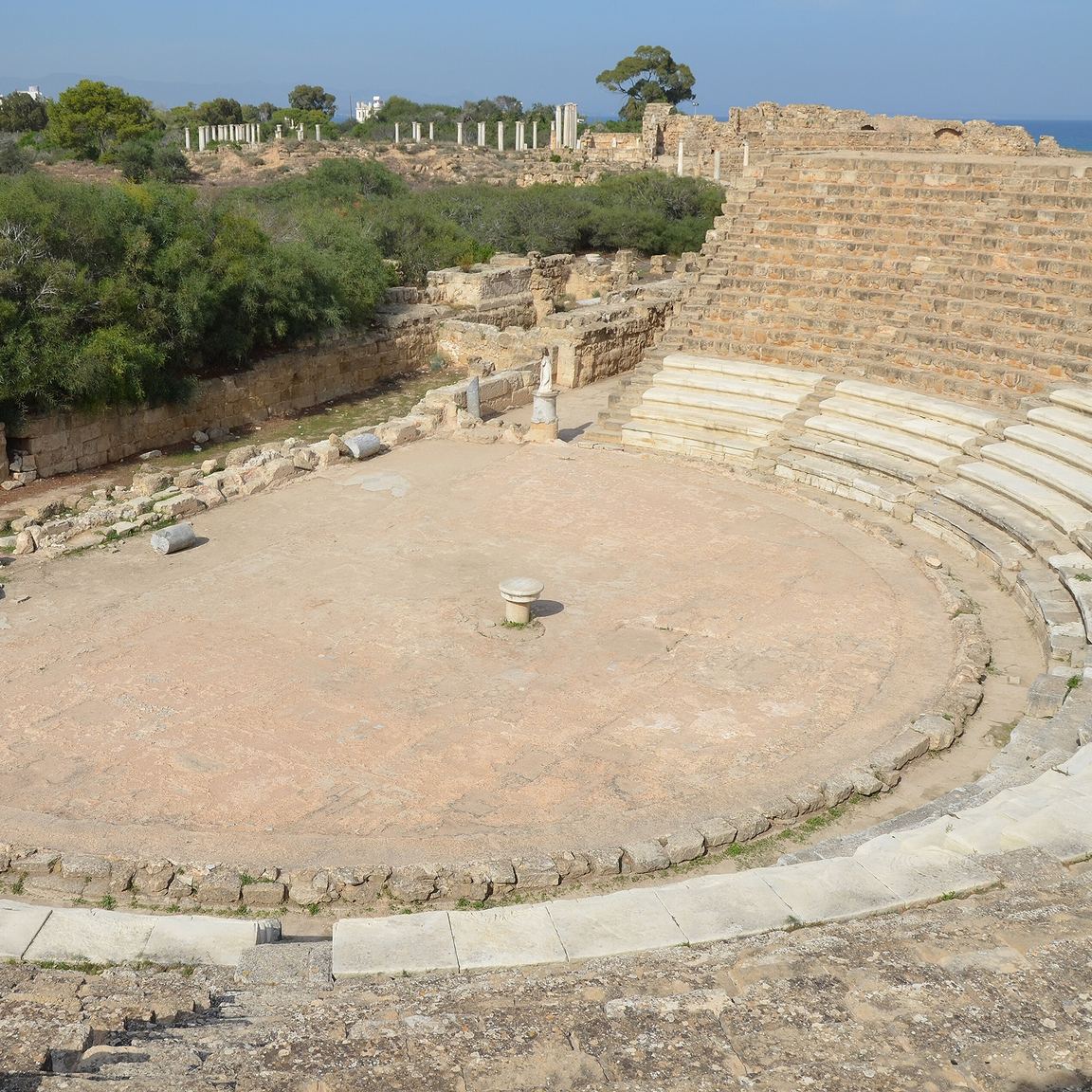
According to legend, the city was founded by Teucer, a hero of the Trojan War. Finds go back to the 11th century BC. Salamis was the seat of one of the Cypriot city-kingdoms; under King Evagoras I (411–374 BC) Greek culture flourished. In 58 BC Cyprus came under Rome. After several earthquakes in the early 4th century, Emperor Constantius II had the city rebuilt under the name Constantia. Later the harbour silted up, and after Arab raids in the 7th century the inhabitants moved to Famagusta. Excavations took place from the late 19th century and again from 1952 to 1974; since then major excavation work has been on hold.
WHAT YOU CAN SEE
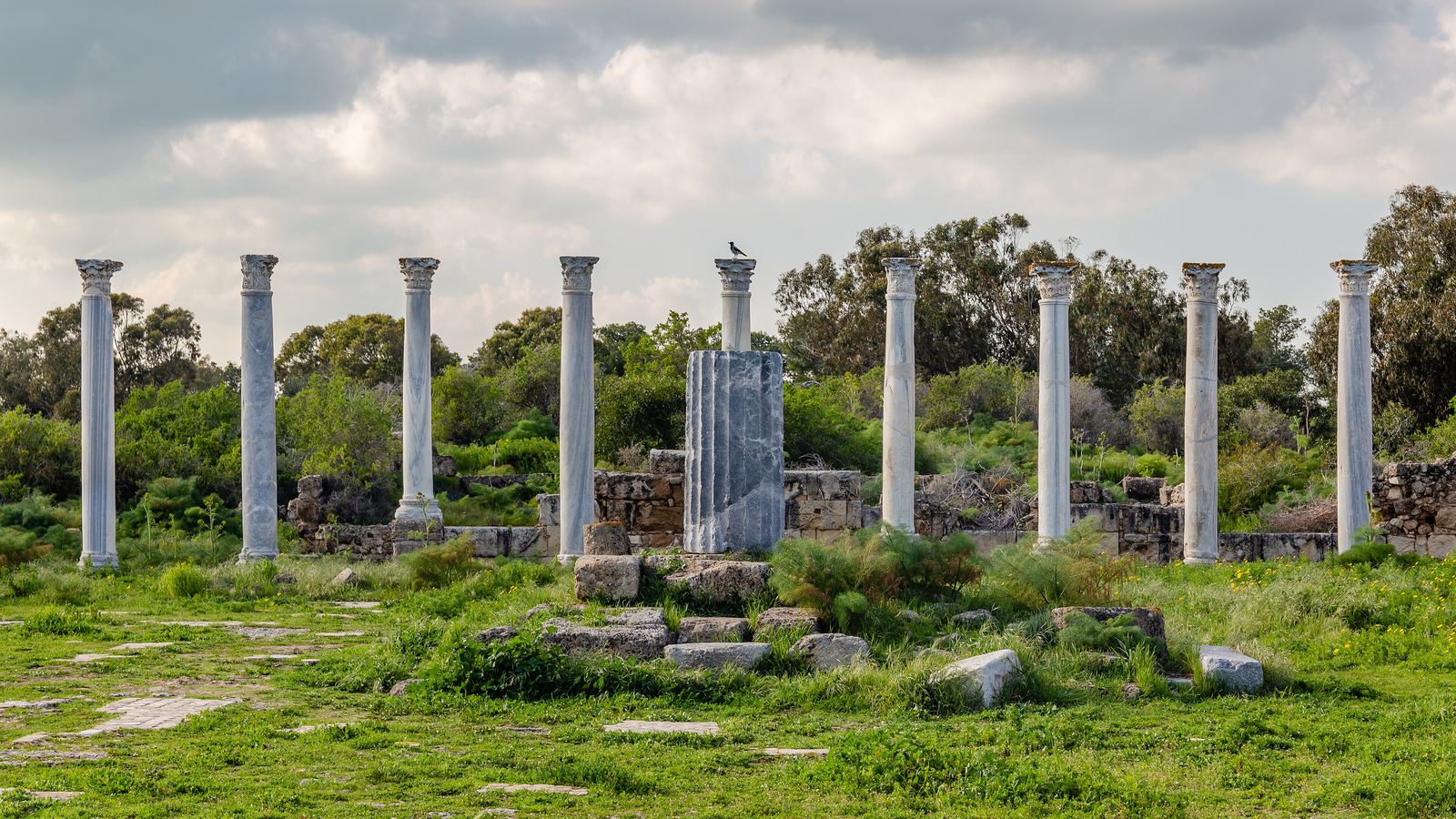
• The gymnasium with its colonnaded courtyard, the best-known photo motif of Salamis. • The Roman baths. • The theatre from the time of Augustus, which held up to 15,000 spectators. • The agora and the remains of a temple of Zeus. • The basilica of Bishop Epiphanius, who served in Salamis from 367 to 403. • Outside the city, a large necropolis with royal tombs.
ST BARNABAS MONASTERY
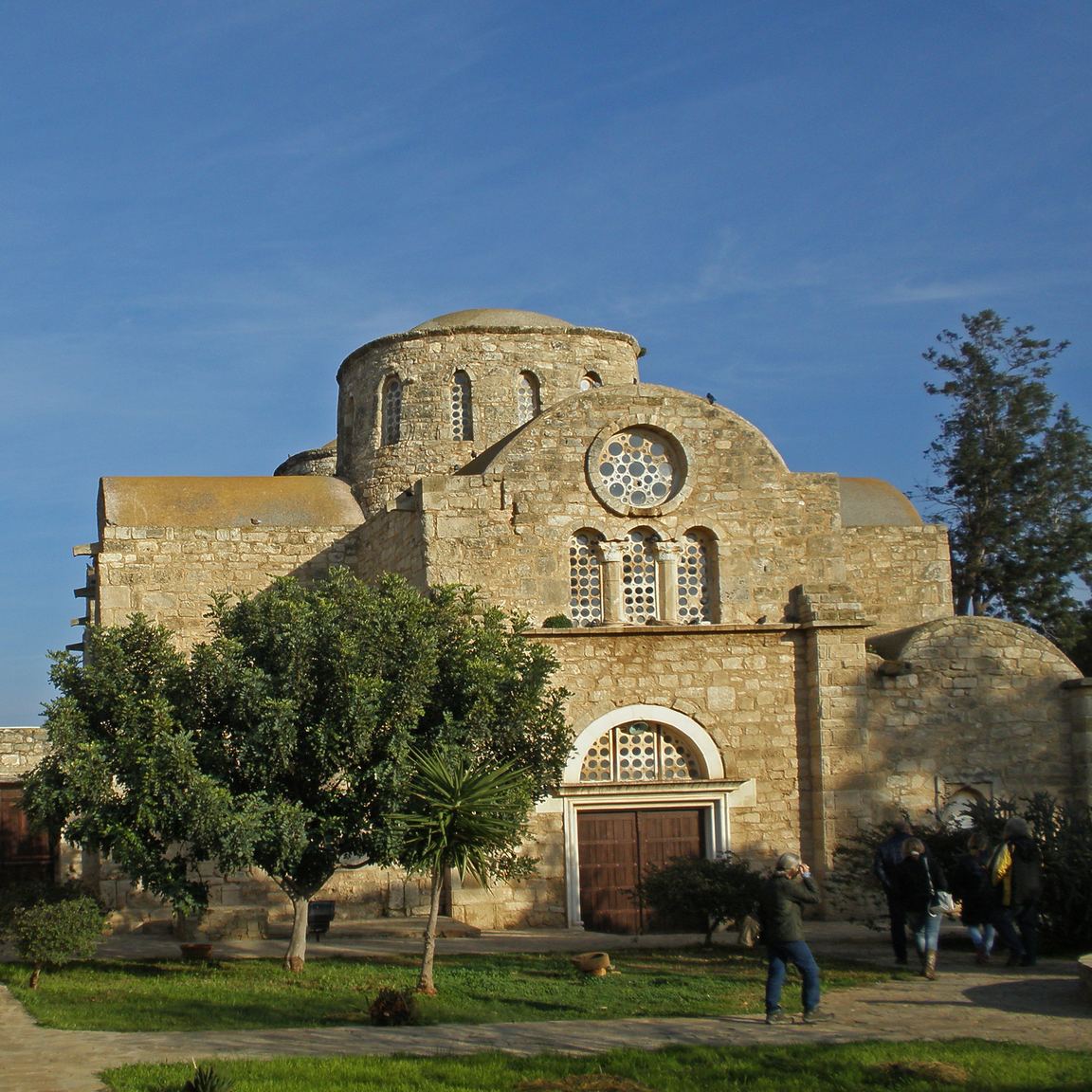
According to tradition, the Apostle Barnabas, regarded as the founder of the Church of Cyprus, was killed in Salamis around the year 61. Paul and Barnabas are said to have landed at Salamis on their first journey. After Archbishop Anthemius found the remains, Emperor Zeno had a basilica built on the spot, probably in 477. The complex took its present form in 1756. From 1971 to 1974 three monks lived here; since 1974 the monastery has been uninhabited. Today the church is an icon museum, and an archaeological museum in the former monastery buildings shows finds going back to the Neolithic. About 150 metres away stands a small tomb building regarded as the tomb of Barnabas.
ADMISSION AND OPENING HOURS
We found no current official information for Salamis or St Barnabas Monastery. Travel websites give different times and prices, so we do not give any figures. The responsible authority is the Department of Antiquities and Museums of the TRNC (Eski Eserler ve Müzeler Dairesi); it is best to ask on site.
GOOD TO KNOW
• The Salamis site is large and in the open. Take water, a hat and sun protection, and in summer go early in the morning. • Time needed: about two hours for Salamis and around one hour for the monastery (our estimate). • Driving times according to a route planner, approximate: from Famagusta old town about 10 km, around a quarter of an hour; from Kyrenia about 76 km, just over an hour. From Salamis to the monastery it is about 3.5 km by car. • Combines well with Famagusta old town: https://kibrios.com/sehenswuerdigkeiten/altstadt-famagusta • For a swim nearby: Glapsides Beach: https://kibrios.com/straende/glapsides-beach Salamis shows in one place how long Cyprus has been settled: from the city-kings through Rome to the early Christian period. With the monastery next door you get a good overview in one morning. All information without guarantee, as of November 2026. Image credit: columns of the gymnasium, photo by Michal Klajban, CC BY-SA 4.0; theatre, photo by Carole Raddato, CC BY-SA 2.0; Monastery of St Barnabas, photo by Amanda Slater, CC BY-SA 2.0 (Wikimedia Commons).